Tracing the Evolution of Side Bet Mechanics in Baccarat Across Global Casino Markets
Written by Sage Vogel · Aug 25, 2026
Tracing the Evolution of Side Bet Mechanics in Baccarat Across Global Casino Markets
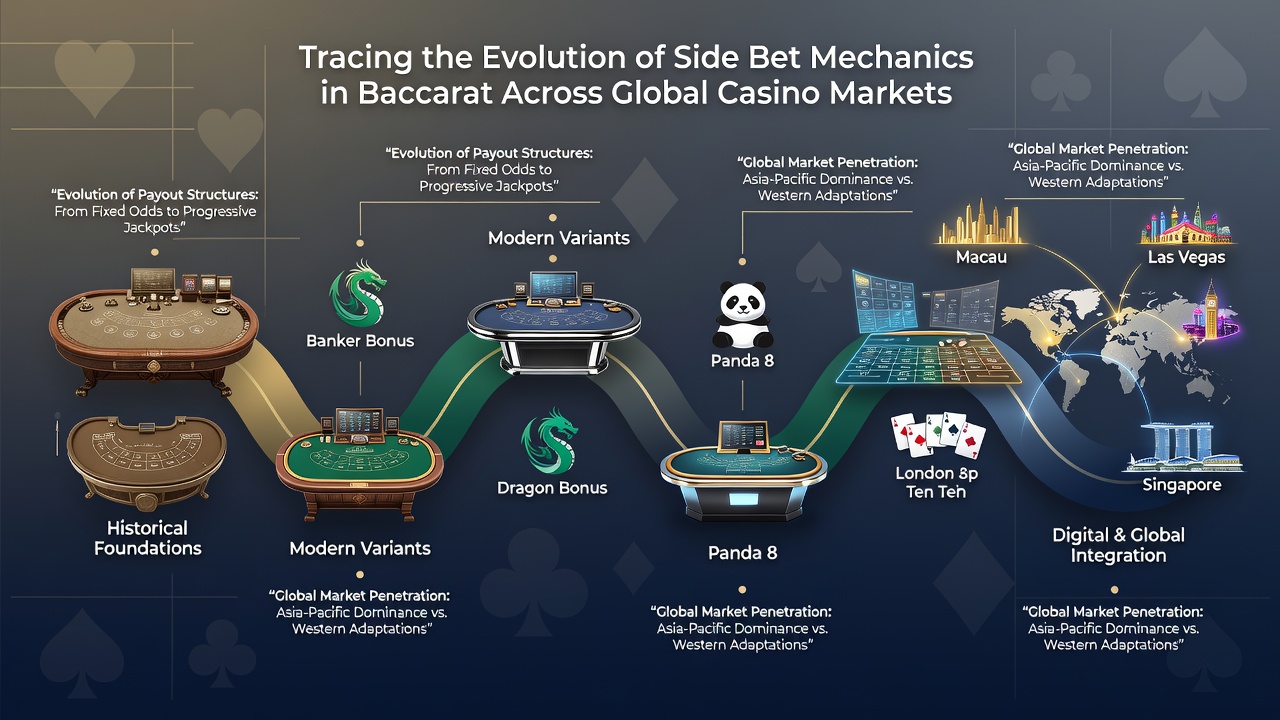
Baccarat side bet mechanics began with basic wagers on player or banker outcomes in European gaming houses during the 19th century, and those structures gradually incorporated additional propositions as operators sought to increase table hold percentages while maintaining player engagement across expanding casino networks. Data from regulatory filings shows that by the mid-20th century, North American venues had started testing supplementary bets such as tie wagers, which paid at 8-to-1 or 9-to-1 depending on jurisdiction rules enforced by state gaming boards.
Early Adaptations in Asian Markets
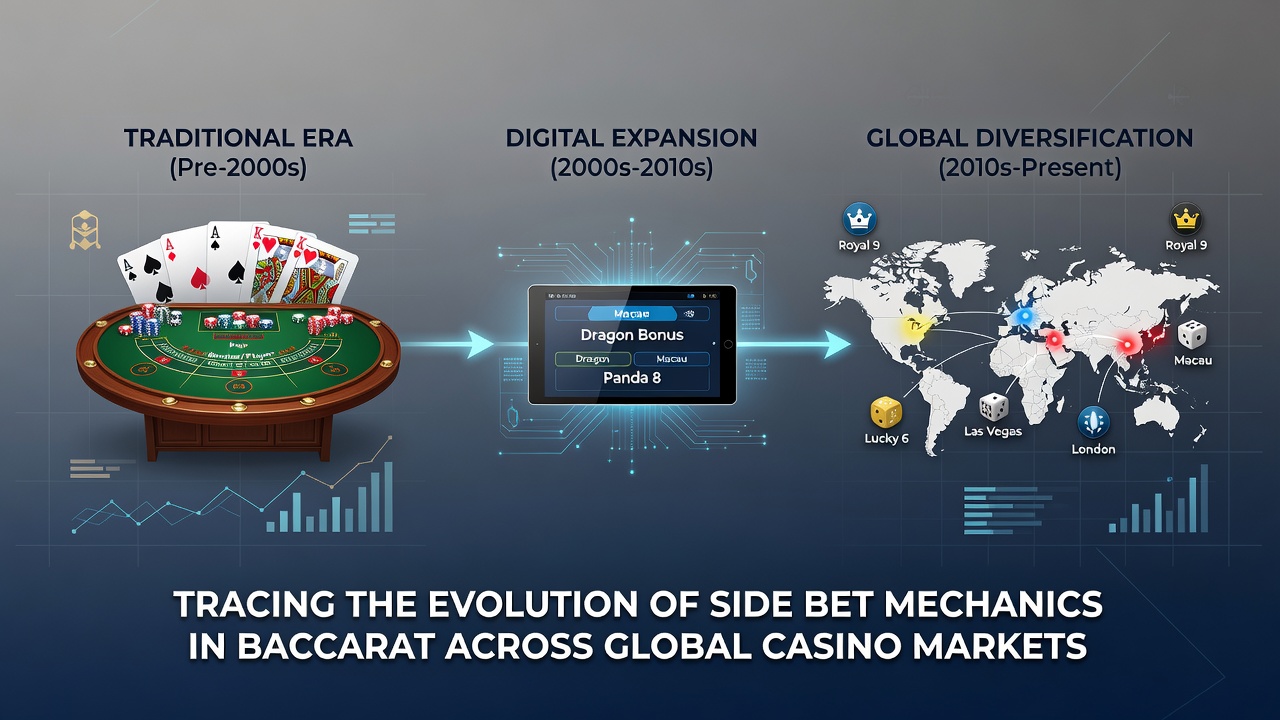
Macau operators introduced the Dragon Bonus side bet in the 1990s, allowing players to wager on whether the player or banker hand would win by a margin of at least four points, and this mechanic quickly spread because it offered payouts ranging from 1-to-1 up to 30-to-1 based on exact point differentials. Research compiled by the Macao Gaming Inspection and Coordination Bureau indicates that Dragon Bonus participation rates climbed steadily through the 2000s as tables in integrated resorts adjusted minimums to attract both high-limit and recreational segments.
Similar innovations appeared in Singapore and Malaysia during the same period, where operators layered Panda 8 bets onto standard baccarat layouts to reward three-card eight-point banker wins at 25-to-1, and those additions coincided with regulatory approvals that required transparent house edge disclosures printed on felt layouts. Observers note that by 2015, multiple Asian jurisdictions had standardized reporting on side bet contribution to overall table revenue, creating datasets that later informed product development in other regions.
North American and European Expansions
Las Vegas properties began rolling out variants such as the 4th Card Bet and Lucky Bonus during the 2000s, each calibrated with specific paytables that accounted for local shuffle procedures and deck penetration rules monitored by the Nevada Gaming Control Board. Figures from that agency show side bet revenue as a percentage of total baccarat drop increased from roughly 12 percent in 2008 to over 22 percent by 2018 in Clark County properties alone.
European casinos followed a parallel path yet often retained stricter payout caps to align with national gaming statutes, and one study published by the European Gaming and Betting Association documented how French and Dutch venues introduced the Super 6 wager, which paid 12-to-1 on banker wins totaling exactly six points while maintaining lower volatility profiles compared with Asian counterparts. Those modifications reflected ongoing calibration between regulatory requirements and operator revenue targets.
Digital Integration and 2026 Developments
Online platforms accelerated side bet evolution after 2020 by embedding real-time probability displays and multi-hand configurations that let players combine several propositions on a single round, and data released in August 2026 by the New Jersey Division of Gaming Enforcement recorded that baccarat side bets accounted for 31 percent of total online table game handle during the preceding fiscal quarter. Live dealer studios in Malta and the Isle of Man incorporated additional mechanics such as the Golden Frog and Tiger Pair bets, each tied to specific card combinations that triggered automated bonus rounds visible to remote participants.
Industry reports from the Canadian Gaming Association highlight how provincial regulators in Ontario approved new side bet paytables for hybrid land-based and online environments in early 2026, requiring operators to submit independent laboratory certifications verifying that combined house edges remained below established thresholds across all offered propositions. Those certifications now include detailed probability matrices that cover edge cases arising from multi-deck shoes and continuous shuffle machines deployed in high-volume venues.
Conclusion
Side bet mechanics in baccarat have progressed from simple tie wagers to complex multi-outcome propositions shaped by regional regulations, technological platforms, and revenue optimization strategies documented in official filings across multiple continents. Current datasets from agencies including the Nevada Gaming Control Board and the New Jersey Division of Gaming Enforcement continue to track participation trends that guide future product refinements in both physical and digital casino environments.