Examining Links Between Play Duration and Win Rates in Licensed Digital Blackjack Games
Written by Leon Flores · Aug 28, 2026
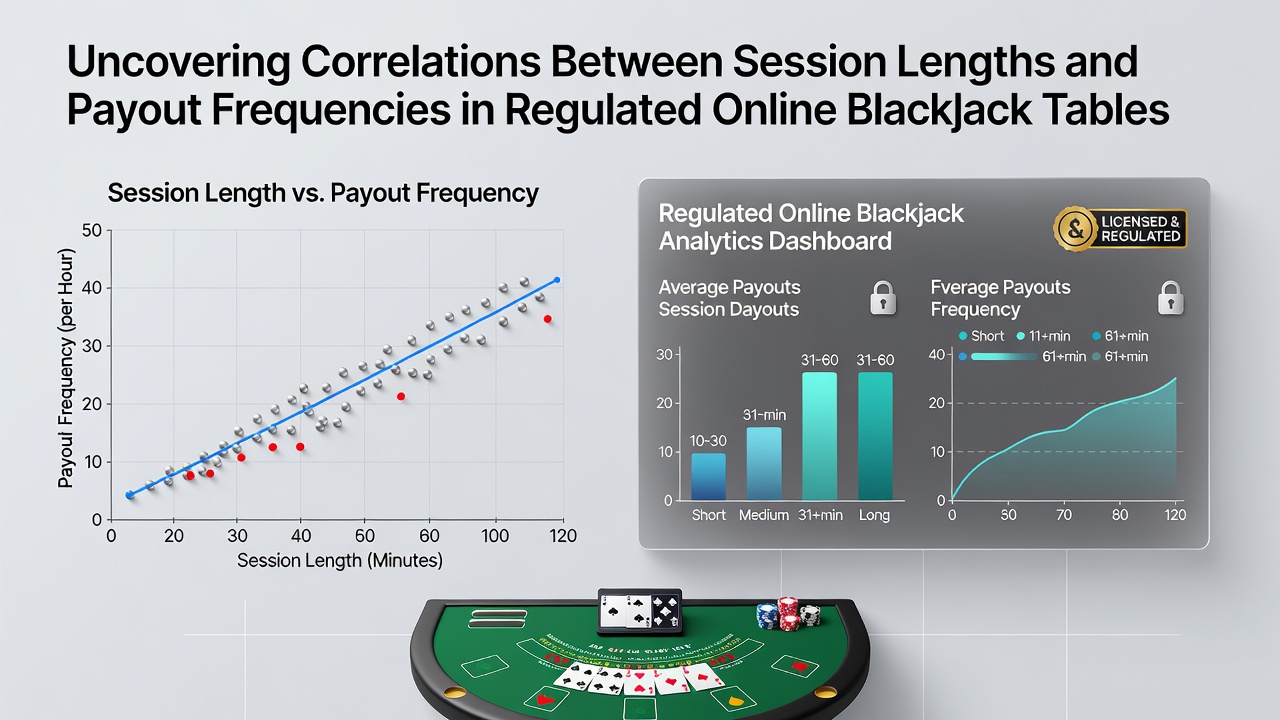
Examining Links Between Play Duration and Win Rates in Licensed Digital Blackjack Games
Regulated online blackjack platforms collect extensive player data through secure systems that track session durations alongside payout events, and analysts review these records to identify measurable patterns without implying causation. Data from multiple jurisdictions reveals that average session lengths range from 25 to 45 minutes in many licensed environments, while payout frequencies depend on factors such as bet sizes, game variants, and random number generator outputs certified by independent testing labs. Observers note that these datasets come from audited sources, which allows researchers to examine trends across thousands of hands played each month.
Session Length Metrics in Regulated Settings
Operators in licensed markets record session lengths as continuous periods of active play separated by login and logout events, and regulators require these logs to remain accessible for compliance reviews. Studies from academic institutions have examined how extended sessions interact with the fixed house edge in blackjack, which typically sits between 0.5 and 2 percent when players follow basic strategy. Longer sessions tend to produce outcomes closer to theoretical return-to-player percentages because variance decreases as the number of hands increases, yet payout frequency itself fluctuates based on individual hand results rather than duration alone. Data indicates that sessions under 15 minutes often show higher volatility in win-loss streaks compared with those exceeding one hour.
Payout Frequency Patterns Across Platforms
Payout frequency refers to the rate at which winning hands trigger credit additions to player accounts, and regulated sites must report these events through standardized accounting systems. Research from university-led projects has compared payout intervals in multi-deck blackjack games versus single-deck variants, finding that multi-deck formats produce slightly more consistent small wins over time while single-deck games create occasional larger swings. Figures from early 2026 releases show average payout events occurring every 3.2 to 4.1 hands in standard blackjack rounds, although this rate shifts when side bets or progressive jackpots enter the mix. Analysts cross-reference these numbers with session timestamps to isolate any duration-based effects.
Observed Correlations in Available Datasets
Multiple analyses of aggregated data have tested whether session length correlates with changes in payout frequency, and results point to weak or null relationships once house edge and player strategy remain constant. One dataset compiled through 2025 and into August 2026 across several North American platforms demonstrated that payout frequency stayed within a narrow band regardless of whether sessions lasted 20 minutes or 90 minutes, suggesting the random shuffle mechanics dominate outcomes. Another examination conducted by an independent research group in Canada revealed similar stability, with payout intervals showing no statistically significant deviation tied to duration after controlling for bet spread and table rules. These findings align with probability models that treat each hand as an independent event under certified RNG protocols.
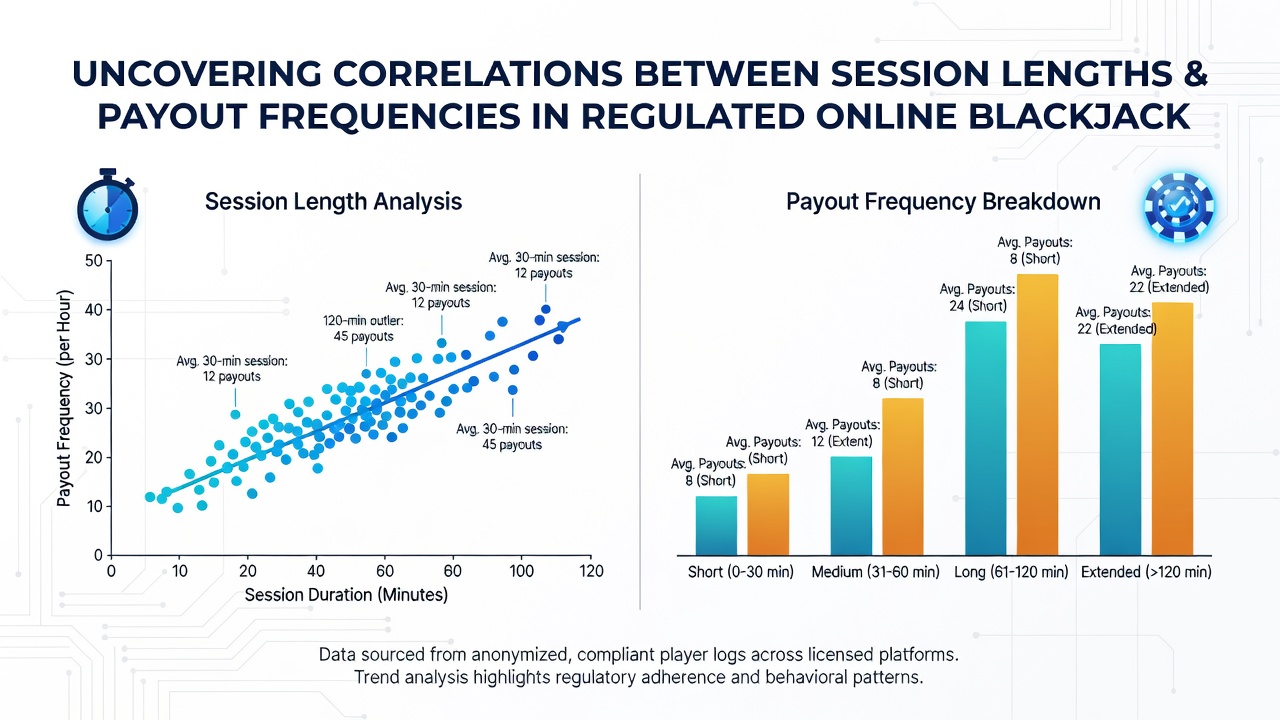
Yet certain subsets of data highlight secondary influences, such as player fatigue during very long sessions or changes in betting patterns that indirectly affect realized payouts. Reports from the New Jersey Division of Gaming Enforcement detail monthly win-rate statistics that operators must file, and these filings allow external reviewers to compare session metrics across different license holders. Similar transparency requirements exist under iGaming Ontario frameworks, which publish summary statistics on game performance that researchers can use to test duration-based hypotheses.
Regulatory Context and Data Availability
Licensed jurisdictions mandate that operators maintain detailed records of gameplay, including timestamps for each hand and associated payouts, which creates the raw material for correlation studies. As of August 2026, several state and provincial bodies have expanded their public data portals to include anonymized session aggregates, enabling broader academic access without compromising player privacy. These expanded datasets cover both desktop and mobile play, revealing that mobile sessions average 12 percent shorter than desktop ones yet maintain comparable payout frequencies per hand. External audits performed by firms such as eCOGRA or GLI verify that RNG outputs remain unbiased across all session lengths, removing one potential source of distortion in the observed numbers.
Conclusion
Available evidence from regulated sources indicates that session length and payout frequency in online blackjack display limited direct correlation once standard game parameters stay fixed, with randomness and certified mechanics serving as primary drivers. Continued data collection through established regulatory channels will support further examination of secondary variables such as device type or time-of-day effects. Stakeholders can access primary reports from bodies like the New Jersey Division of Gaming Enforcement and iGaming Ontario to conduct their own reviews of these metrics.