Discard Pile Mechanics Shift Betting Patterns Across Hybrid Poker-Rummy Platforms
Written by Jonas Keller · Oct 23, 2026

Discard Pile Mechanics Shift Betting Patterns Across Hybrid Poker-Rummy Platforms
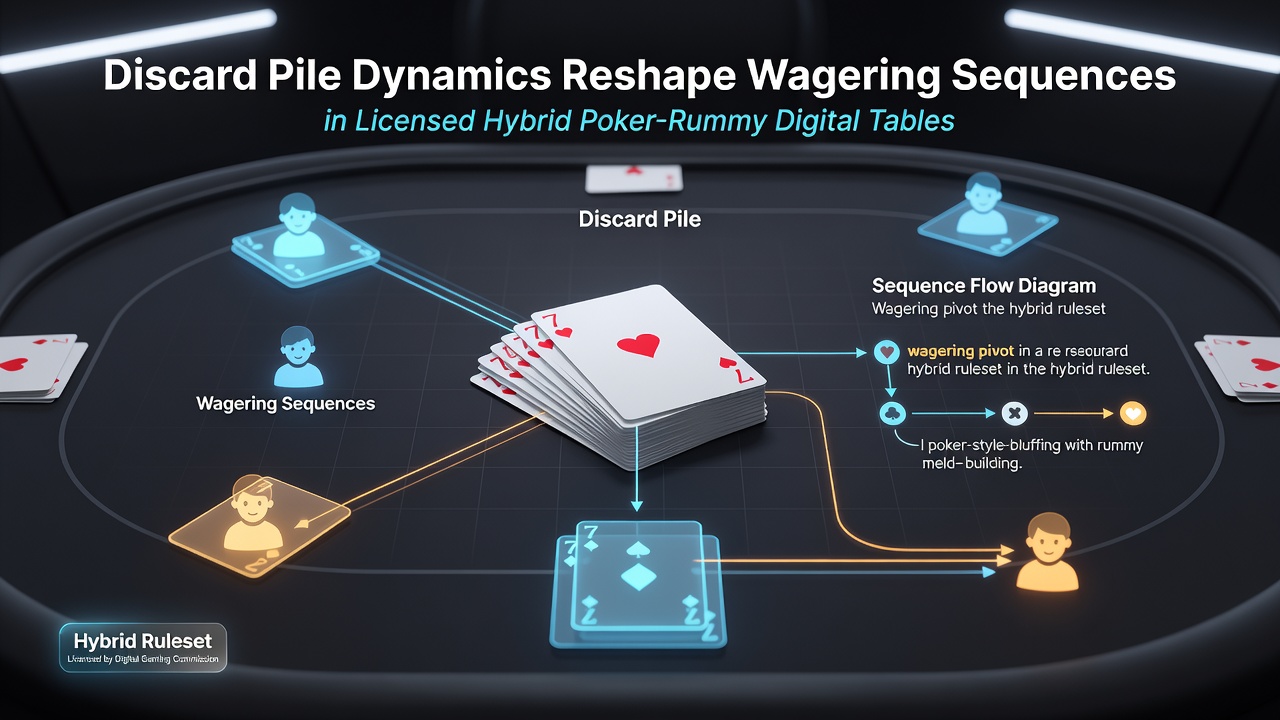
Hybrid poker-rummy tables combine elements of both games on licensed digital platforms, and the discard pile serves as a central feature that alters how players sequence their wagers. Data from regulated operators shows that visible discards provide information which can change bet sizing during successive rounds, since participants adjust strategies based on cards that have already left play. Observers note this dynamic appears most pronounced in environments where the pile remains accessible throughout multiple hands, creating a running record that influences decisions on when to raise, call, or fold.
Core Mechanics in Licensed Hybrid Environments
Licensed platforms implement discard piles through certified random number generators that determine card distribution while maintaining a public record of removed cards. Research indicates that in hybrid formats the pile functions differently than in standalone rummy or poker because betting occurs across both meld-forming and hand-ranking phases. Players therefore encounter sequences where an early discard can signal reduced probability for certain combinations, prompting adjustments in wager amounts during later streets. Figures from platform audits reveal that average bet sizes fluctuate by measurable margins once the discard count exceeds a threshold of eight cards in a single session.
Sequence Adjustments Driven by Pile Visibility
Wagering sequences evolve when participants factor the discard pile into probability calculations for remaining draws. One documented pattern shows that after several high-value cards enter the pile, subsequent betting rounds exhibit shorter action chains because fewer players continue to later streets. Regulators in multiple jurisdictions track these patterns through mandatory reporting, and data submitted to the Alcohol and Gaming Commission of Ontario demonstrates consistent shifts in round duration tied to pile composition. Those who have examined session logs observe that sequences starting with aggressive early bets often shorten once key cards appear in teh discard area, reducing overall cycle length per hand.
Platform algorithms further shape these outcomes by refreshing the pile at fixed intervals to prevent excessive information accumulation. Yet the interval timing itself becomes another variable that operators must calibrate, since abrupt resets can restart betting momentum in ways that differ from continuous pile models. Industry reports compiled by the International Gaming Standards Association document how different reset frequencies correlate with changes in average wager velocity across licensed sites.
Regulatory Monitoring and Platform Data
Regulatory bodies require operators to log discard-related events alongside bet histories, creating datasets that reveal correlations between pile states and wagering behavior. In October 2026, updated compliance frameworks in several North American markets began emphasizing real-time reporting of these metrics to detect any unintended patterns. Analysts reviewing submissions to the New Jersey Division of Gaming Enforcement note that hybrid tables generate distinct data signatures compared with pure poker or rummy offerings, particularly in how discard visibility affects multi-round betting persistence. External audits confirm that licensed systems maintain cryptographic seals on discard sequences, ensuring the information presented to players matches the underlying random generation process.
Academic studies published through university gaming research centers have examined similar mechanics in controlled simulations. One analysis from a Canadian research group found that discard pile size exerts measurable pressure on bet spread during hybrid rounds, with larger piles correlating to narrower ranges of wager amounts. These findings align with operator-collected telemetry that shows players reducing bet increments once the pile reveals repeated suits or ranks.
Implementation Across Digital Tables
Software providers integrate discard pile displays directly into the user interface, often alongside timers that track how long each card has remained visible. This design choice allows participants to reference historical discards while constructing their next wager decision. Platform logs indicate that interfaces which highlight recent discards produce slightly different sequence lengths than those presenting minimal visual cues. Operators adjust these display parameters during certification testing to meet jurisdictional standards for fairness and transparency.
Cross-border comparisons reveal further variation. Australian regulatory submissions, for instance, track how discard mechanics interact with local responsible gambling tools, requiring automatic pauses when betting sequences accelerate beyond predefined thresholds. Such measures demonstrate how discard pile dynamics intersect with broader compliance requirements rather than operating in isolation.
Conclusion
Discard pile dynamics continue to influence wagering sequences on licensed hybrid poker-rummy tables through the information they convey and the adjustments players make in response. Regulatory data from multiple regions, combined with platform telemetry, establishes clear connections between pile states and betting patterns. As digital environments evolve, operators maintain these systems under ongoing oversight to ensure sequence integrity and compliance with established standards.